Entry · Ref NZJ8S0BO
Fitness + Safety: Self Defense Classes condition1combat.com for Women
- Posted
- 2026-10-08
- Last amended
- 2026-10-08
- Account
- @riverahkb184
Women walk into self defense classes for different reasons. A late night parking garage that felt wrong. A job that requires travel. A goal to get stronger without spending an hour staring at a treadmill screen. The right program can deliver all three: practical skills for messy real life, a clear path to better fitness, and a community that actually supports progress. That combination is what sets the women’s self defense track at Condition 1 Combat Center apart, both on the mat and beyond it.
The training culture at this gym favors results over bravado. You learn to recognize trouble early, create space, hit hard when you have to, and get away clean. You also leave class sweat-soaked, with your heart rate peaking in short, repeatable intervals that build capacity fast. Whether you enter through the door marked self defense or that marked Brazilian jiu jitsu or Muay Thai, the goals align. Build useful strength, gain control under pressure, and make smarter choices when situations turn sideways.
Why self defense should be trained like a sport
Bad situations don’t unfold in tidy steps. They spike, stall, and surge. Skills that hold up in that rhythm have to be practiced at realistic speed against partners who resist, not just in choreographed drills. A credible program includes contact, but keeps it safe and measured. You need to feel what it is like when someone grabs a wrist with intent, or crowds your space near a wall, or tries to drag you toward a doorway. You also need time to repeat the right response until it feels automatic.
At Condition 1 Combat Center, the curriculum borrows heavily from the combat sports taught in the same facility. The mma gym environment forces ideas to prove themselves. Techniques that look clever but break down under pressure don’t survive. What remains is dependable: a tight clinch that blocks strikes, footwork that circles you off a fence line, an elbow that opens an exit, and ground escapes that function even when you are tired and under load. The transfer to self defense is straightforward.
The interplay of fitness and safety
Consider the average defensive exchange. There is a burst of acceleration to create space, a short sprint, or a scramble up from the ground. Often there is a brief but intense isometric pull as you clear a grip. Your heart rate spikes near max and then drops as you find an exit. That is interval training. A class built on rounds of focused striking, clinch work, and ground escaping trains the energy systems that matter most for both safety and daily life.
Workout design at an mma gym like Condition 1 Combat Center reflects this. You move between technical reps, partner drills, and hard but brief conditioning rounds. The movements are compound, hips and shoulders working together. The carryover to real strength is obvious the first time you lift a suitcase into an overhead compartment or fight free of a heavy winter jacket snagged on a door handle. Fitness comes as a side effect of practicing useful skills.
What women’s self defense covers in practice
A complete session is layered. You start with awareness and positioning. You learn to manage distance with your feet, hands, and voice. Then you rehearse preemptive frames that spoil grabs on shoulders, wrists, hair, and clothing. Once you can stop the first contact from locking in, you add focused striking, prioritizing the tools that land fast and hit hard without risking your hands.
Brazilian jiu jitsu rounds out the ground portfolio. Not sport points, but survival positions that protect your face, keep your hips mobile, and return you to your feet. If you have spent time in a bjj gym, you know the confidence that comes from understanding frames, leverage, and scooting to a wall to stand. That knowledge changes how you carry yourself and how you plan exits.
Scenario work comes last, only after skills have been drilled. Hallways, doorways, car doors, and walls get involved. You test whether the responses you practiced while fresh still hold up when you are breathing hard. The key is graduated intensity. New students work at a slower clip to protect learning. Experienced students get more speed and resistance. Everyone leaves with one or two sharpened skills that could matter tomorrow.
The role of Brazilian jiu jitsu, explained simply
Brazilian jiu jitsu for self defense emphasizes positional control over fancy submissions. From the bottom, you learn to protect your head, keep elbows inside, build a frame with your forearms and shin, and then scoot to a hip and stand. From the top, you learn to stay heavy across the hips, base with knees and hands, and pin the pelvis rather than chasing the head. It is the difference between rolling around and actually shutting down motion.
At Condition 1 Combat Center, brazilian jiu jitsu training blends with the stand up modules. A short striking exchange might end in a clinch and a trip, and now you are on concrete in your imagination, not a soft mat. You create space with a knee shield, kick off, stand with a technical get up, and exit along a chosen path. The chain is learned piece by piece. Repetition builds speed that cannot be faked.
Students appreciate that bjj techniques scale with size and age. Leverage and angles do not require peak strength. A 5-foot-2 student can use a hip heist and a strong frame to unseat a larger person’s balance. That does not erase strength differences, but it narrows them enough to make a difference when paired with good judgment and timing.
Why Muay Thai and boxing matter for women
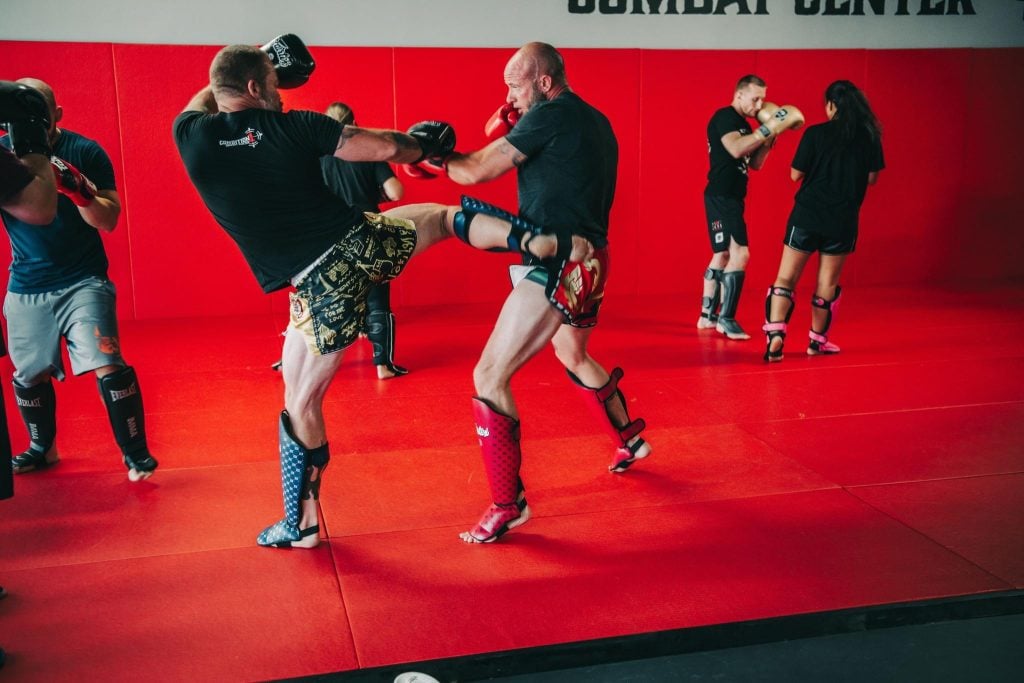
Striking is not about volume, it is about quality. Boxing builds footwork, timing, and a jab that interrupts approach. Muay Thai adds elbows, knees, and a strong clinch. For self defense, elbows and palm strikes are preferred tools. They protect your hands from fractures and still carry fight-ending force. A short horizontal elbow delivered from a tight guard can interrupt a grab. A knee to the thigh or body stops forward pressure.
Condition 1 Combat Center’s Muay Thai and boxing training sharpen these skills without turning class into a slugfest. You learn to angle off the line, cover while moving, and throw two or three high-value strikes before exiting. Coaches cue breathing, shoulder position, and hip drive. The result is economy. One or two decisive actions beat a string of sloppy ones.
An added bonus, pad rounds and bag work are exceptional cardio. Heart rate climbs fast, then resets during coaching cues. Students who come for safety often find their aerobic base and body composition improving within a few months, especially when they show up two to three times per week.
MMA integration without the chaos
The mma gym environment at Condition 1 Combat Center gives women a chance to see how striking, clinch, and ground skills connect. That does not mean you have to spar full rules. Smart programs offer controlled drills that simulate phases of an altercation. You might begin at hand-fighting distance with light contact, work to a clinch against the wall, and then transition to a ground escape. The continuity builds problem-solving ability. You learn to read posture, hips, and intent, not just isolated grips.

This cross-training matters if you ever face a situation that refuses to stay neat. If a grab turns to a bear hug, you have clinch skills. If you trip and fall, you have ground survival. If you create space, you have the footwork and strikes to break contact and run. Redundancy across disciplines makes you more resilient under stress.
What to expect in your first women’s self defense class
- A clear safety brief that covers tapping, boundaries, and how to opt out of any drill
- Warm ups that prep hips, shoulders, and grip without burning you out
- Technical segments on distance, frames, and simple strikes that protect your hands
- Partner drills with gradually increasing resistance and specific coaching cues
- Short conditioning rounds, usually 20 to 40 seconds, matched to the skills of the day
Expect a professional tone rather than posturing. Coaches at a serious mma training space understand that new students bring varied histories. The goal is to send you home more capable, not rattled. You will be paired thoughtfully, and you will know exactly what you are working on in each round.
Safety and culture are not afterthoughts
A gym can have great technique and still be a poor place to learn if the culture tolerates ego. The better facilities, including Condition 1 Combat Center, set standards. Gloves, mouthguards, and shin guards for striking. Close-trimmed nails, clean uniforms, and clear tapping signals for grappling. Partners communicate. Coaches watch pairings and pace, and they stop unproductive intensity before it begins.
Women’s classes benefit from clarity around verbal boundaries and consent for drills that involve close contact. Nothing should be a surprise. You should know whether a round will go to the ground or stay on the feet, how hard you will be working, and when to change partners. That predictability frees you to focus on learning rather than bracing for the unknown.
Tracking progress without obsessing over numbers
Martial arts progress is easier to feel than to measure, but a few markers help. If you keep a small training notebook, you will see themes emerge. In month one, maybe you recorded three techniques that felt clumsy. By month two, one of them becomes a go-to solution. You notice that your heart rate recovers faster between pad rounds. You realize you can pummel for inside control without holding your breath.
Some students like objective data. Interval timers, heart rate monitors, and simple strength tests can show trends. If you enter with a 15 second high plank and reach 45 seconds while breathing steadily, your frames will hold better on the ground. If your resting heart rate drops by 5 to 10 beats per minute across a season, your ability to make decisions under effort improves. None of this replaces trust in your instincts, but it helps you see that practice is compounding.
Practical scenarios, not scare tactics
Realistic scenario training helps you apply skills without dramatics. Common settings include parking lots, porch steps, office hallways, and the space between car doors and seats. You practice using your bag as a barrier, how to talk while moving, and where your hands live when a stranger asks Condition 1 Combat Center condition 1 combat center for directions. You test how jackets, scarves, or long hair change certain grips and responses. Coaches emphasize exits over takedowns.
Edge cases get covered with care. Multiple persons arriving from different angles. The sudden presence of a wall when you thought you had space. Low light, loose gravel, or wet tile. You discover that good footwork and a strong clinch solve many of these variables. If conditions are too risky to simulate live, coaches walk you through the decision tree, then return to pressure-tested segments that will still help.
Equipment, hygiene, and small details that matter
You do not need to buy a closet full of gear to start. A good pair of 14 or 16 ounce boxing gloves, hand wraps, and a mouthguard cover most striking sessions. For grappling segments, a rash guard or fitted top and leggings reduce friction and protect your skin. If the program includes brazilian jiu jitsu training, coaches will tell you when a uniform is needed. Bring water and a small towel. Keep hair tied back with snag-free ties.
Hygiene is non-negotiable. Clean gear lasts longer and protects partners. Wipe down gloves, wash wraps, and launder training clothes after every session. Cuts need to be covered. If you are under the weather, stay home and let your body heal. You are investing in a community as much as in your own skills.
Addressing common misconceptions about women’s self defense
- You need to be strong to be effective: Strength helps, timing and leverage matter more. Drills teach you to use hips and body weight, not just arms.
- It takes years to be useful: You can learn a handful of high-yield skills in weeks, then deepen them over time.
- Grappling is only for sport: The right bjj gym approach focuses on frames, distance, and standing up, which transfer directly to safety.
- Striking breaks your hands: Proper targets and tools, like elbows and palms, let you hit hard with lower injury risk.
- You have to spar hard to learn: Graduated contact builds realism without needless harm. Quality reps beat chaos.
Each of these points shows up often in first conversations with new students. They deserve careful, experience-based answers, not slogans. The better gyms answer with demonstrations, then they give you time to feel the difference.
How Condition 1 Combat Center ties it together
Look around the mat during a mixed session at this facility and you will see the throughline. A group on mitts working two-beat combinations with exits. Another group on the wall drilling pummeling and foot placement to avoid being pinned. A bjj pod practicing technical stand ups with a partner offering measured resistance. The energy is focused rather than frantic. Coaches move station to station with specific feedback.
Condition 1 Combat Center functions as a true mma gym in the classical sense. Not just a place to spar under a cage banner, but a school that blends boxing, Muay Thai, wrestling, and Brazilian jiu jitsu into a teachable system. That cross-discipline depth benefits self defense classes because it provides options. If a plan fails, you have a next step that has already been stress-tested in the mma training room.
Students come in through different doors. Some start with the dedicated women’s self defense classes. Others arrive via the Condition 1 Combat Center bjj gym schedule or the Muay Thai curriculum. Many add a boxing session each week for footwork and conditioning. The point is not religion about one art. It is to develop a reliable skill set that matches your body, your schedule, and your risk profile.
Adapting training for different body types and histories
Coaches who work with many women learn how to tailor tactics. If you have a history of shoulder issues, frames can be adjusted to reduce strain while keeping structure. If you are tall, you may favor long knees and posts to manage distance. If you are compact, you may build a clinch that is hard to shake and uses inside position to shut down movement.
Trauma-informed coaching matters. Good instructors explain the drill, demonstrate it at full speed and in slow motion, and ask for questions. They give you control over intensity. If a drill involves close contact or restraints, they outline opt-out phrases and hand signals. It sounds formal, but it lets you work hard without surprises.
How often to train and how to blend classes
Two to three days per week is the sweet spot for most students balancing work and family. One focused self defense class paired with a bjj or Muay Thai session gives you both macro and micro skills. The self defense class keeps scenarios fresh. The sport classes sharpen individual tools. If your week is busy, prioritize one class that raises your heart rate and one that deepens a technical skill you rely on. Consistency beats intensity in the long run.
The mma training Condition 1 Combat Center offers often includes open mat or bag time. Use those windows to groove core movements at an easy pace. Ten minutes of technical stand ups, ten minutes of jab footwork, ten minutes of clinch pummeling with a focus on posture. That half hour stacks up across a month.
A story from the mat
One student, a nurse who works nights, arrived quietly. She had been jarred by an incident in a hospital parking lot. No assault, but too close for comfort. In her first month she focused on footwork, verbal boundary setting, and frames against wrist and shoulder grabs. Her notes were meticulous, and her pad rounds were cautious. In month two, she added simple elbows and a technical stand up. In month three, she was coaching a new student through the same sequence she had learned herself.
The turning point showed up during a scenario round near a doorway. She broke a grip with a sharp rotation, posted a forearm, slipped to an angle, and exited while talking, not yelling. She was breathing hard, but steady. After class she said the thing that mattered most was not the elbow, it was knowing where her feet should be at each step. That is what consistent training gives you: a map under stress.
Choosing the right membership and asking better questions
When you visit condition1combat.com, look beyond the timetable. Read coach bios. Do they have depth in at least one sport and cross training in others, or is everything presented as a jack-of-all-trades? Check whether the schedule shows women’s self defense classes at practical times. Look for on-ramps for beginners and options for private sessions if you prefer to start one on one.
Ask about sparring policies. At a mature boxing gym or Muay Thai program, contact is introduced carefully, with gear, and only when the student asks for it and is ready. At a bjj gym with a strong culture, live rounds are watched with a coach’s eye, beginners are paired thoughtfully, and the room values learning over scoreboard rolling. Condition 1 Combat Center’s reputation grows on these small but critical details.
Finally, ask how the gym handles feedback. The best places invite it. If a drill makes you uncomfortable, coaches should offer a variant that teaches the same principle with different mechanics. A healthy training space adapts without losing standards.
Keywords and the real product: capability
Marketing phrases can sound alike. Mma gym Condition 1 Combat Center. Condition1combat.com mma training. Condition 1 Combat Center brazilian jiu jitsu training. Muay Thai gym condition1combat.com. Boxing gym Condition 1 Combat Center. Those strings show up in searches, and they point to doors you can actually walk through. The real product on the other side is capability. You will hit pads with purpose, frame with structure, breathe through contact, and exit on your terms.
Self defense classes at Condition 1 Combat Center are not a box to check. They are an introduction to a broader practice that builds fitness and safety together. If you are ready to start, bring curiosity and a willingness to work. The coaches will meet you there with a plan.
Final thoughts from experience
Every student who sticks with it reports the same change. The world feels less crowded. Not because threats disappear, but because choices increase. You notice angles and exits. Your hands find home position without fuss. Your breathing stays organized when someone is in your space. Fitness improves quietly in the background, because you are doing the work for a reason.
If you are on the fence, try a class. Walk into the Condition 1 Combat Center mma gym and tell the coach what brought you in. They have heard it before, and they know how to translate that story into a training path. Whether you lean toward the bjj gym sessions, the boxing gym mitt work, or the Muay Thai clinch, you will find something that fits. The first step is the only one you cannot rehearse. Everything after that, the team at condition1combat.com can teach you.