Entry · Ref TDVYMEHH
Fight Camp Blueprint from condition1combat.com MMA Training Staff
- Posted
- 2026-10-08
- Last amended
- 2026-10-08
- Account
- @riverahkb184
A good fight camp is not just weeks of hard rounds and sweat. It is a plan with clear checkpoints, honest communication, and a realistic map from where you are to where you need to be. At Condition combat center 1 Combat Center, we have built camps for first-time amateurs, regional champions, and veterans who have seen the bright lights. The variables shift from fighter to fighter, but the backbone stays the same: assess, prioritize, build, sharpen, then taper with intent. When that process is consistent, the last walk to the cage feels quiet and familiar.
The first meeting sets the tone
Everything starts with a sit-down. We ask for your preferred style, your last three opponents, the things you dislike doing, and the injuries you hide. We look at your calendar, your day job or school load, how many days you can truly give to the room. If you tell us you can train 12 times a week while working nights, we push back. Overpromising now only shifts the crash into week four.
We also bring in coaches from across our rooms. Our MMA coaching staff, along with leads from our Brazilian jiu jitsu program, Muay Thai, and boxing, builds a shared picture. If the opponent is a southpaw grappler with a strong body-lock series, our wrestling and BJJ coaches are in from the start. If the opponent leans on a Dutch-style pressure game, our Muay Thai and boxing coaches shape the striking map. This is part of what makes a complete facility valuable. At Condition 1 Combat Center you can walk from the boxing ring to the cage to the BJJ mats in one evening, with the same team speaking one language.
Baselines, not guesses
We collect baseline data in week zero. The numbers are simple and actionable, not fluff.
- Resting heart rate and heart rate recovery after a repeatable shuttle or assault bike test.
- A three-jump average for lower-body readiness, plus a grip dynamometer score for general fatigue.
- Five-minute technical rounds filmed at moderate pace, one in each discipline, to see patterns when you are not stressed.
- Sparring rounds at controlled intensity to evaluate composure, not to win the room.
The film is where most plans change. We match your stated style against what the camera shows. If you say you are a pressure wrestler but your entries stall at the fence, we reallocate time to cage wrestling and chain attacks off failed shots. If your Muay Thai clinch is untested and your opponent thrives there, we do not pretend pad work will fix it. Targeted rounds on our Muay Thai side, with a coach riding the clinch hand-fighting details, do more than a hundred flashy combinations.
The camp architecture
Camp length should match the fighter and the ask. Six weeks works for a well-conditioned athlete who stayed sharp between bouts. Eight to ten weeks suits a heavier weight cut or a rebuild. The map below is how we commonly structure an eight-week camp. The details flex, but the principle stays: start broader, finish sharper.
- Weeks 1 to 2, build capacity, affirm fundamentals, develop your A and B paths to the win.
- Weeks 3 to 5, elevate intensity, add opponent-specific layers, progress sparring volume strategically.
- Week 6, peak specificity with fewer total rounds, more scenario work, and heavier game plan reinforcement.
- Week 7, taper volume, keep speed and timing, weight management tightens.
- Fight week, maintenance, nerves management, and execution routines.
This is the skeleton. Inside it we shape days and sessions around your job, recovery profile, and opponent’s tendencies.
Daily rhythm without grinding you into dust
A typical week for a pro in full-time camp often includes two to three double days, with one true rest day and one active recovery day. Amateurs with day jobs tend to run one technical session on weekdays, a conditioning block early or late, and longer weekends. The split might look like this for a balanced athlete:
Monday, morning strength and mobility, evening MMA drilling with cage emphasis.
Tuesday, boxing skill with defense focus, short conditioning finisher, film review before bed. Wednesday, BJJ positional sparring and wrestling chains, light run or bike for blood flow. Thursday, controlled MMA sparring or scenario rounds, pad work to reinforce fight themes. Friday, Muay Thai clinch and knees, grip and neck work, sauna or contrast therapy. Saturday, longer technical session with shark-tank rounds then cooldown and stretch. Sunday, off or easy swim and a walk, meal prep, sleep.Every day has a purpose, not just a workload. Conditioning sits close to skills that are metabolically similar. Heavy lower-body strength pairs best on days without hard sparring. Film and visualization slip into evenings when the body needs stillness.
Strength and conditioning that respects the fight
Strength is not a separate sport. Our S and C coach sits in on sparring days and watches how you move when you are tired. That guides the weight room. If you fold in the clinch, we spend time on isometric holds for the posterior chain, carries, and grip. If your shots lack pop, we bias toward trap bar jumps, med-ball throws from varied bases, and sled work that mimics the drive phase.
Intensity in the gym follows the camp curve. Early weeks feature two to three full sessions with moderate volume and repeated power work. Middle weeks shift to two sessions with lower volume but high intent on speed and heavy singles or doubles in key lifts. By week seven we use micro doses, 20 to 30 minutes of explosive and activation work, to keep you feeling spring loaded without lingering fatigue.
Conditioning is specific. We use mixed modal intervals that look like a fight: two- to five-minute bouts, sustained but sharp effort, plus scrambles. Assault bike with band-resisted shots, sprawls into clinch pummels on the wall, light ground and pound flurries on a bag, then a fast stand to stance reset. We track heart rate and RPE and watch recovery between rounds. If you do not return under 120 to 130 beats by minute two post round during mid camp, we pull volume elsewhere. The goal is to land on fight night with the engine you need, not the most miles logged.
Building the technical layers
Where you spend minutes matters more than how many you stack. Each week has a technical theme tied to the opponent and your winning routes.
Striking, if your path leans on boxing, we train entries behind the jab and feints that matter against this opponent, not generic patterns. If you are facing a southpaw, your rear foot position and outside hand fighting get daily attention. Our boxing room is not separate from MMA reality. Every combination ends with a stance that supports a level change or a retreat to space.
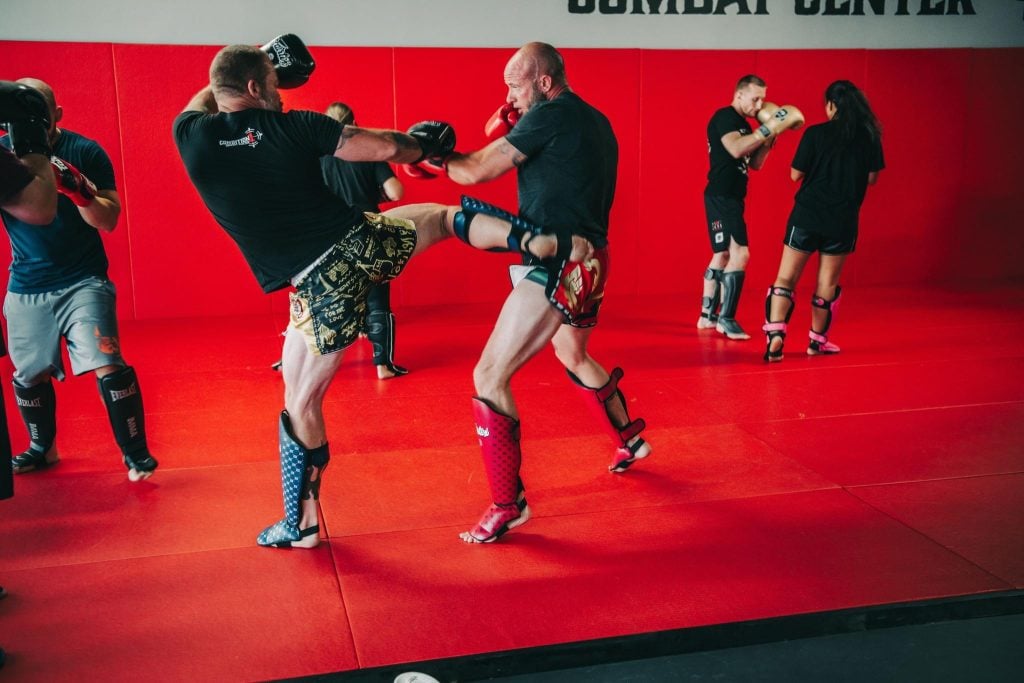
Muay Thai and the clinch, when the opponent favors knees and elbows, your pummeling is not optional. We rep frames, collar ties, wrist controls, and off-balancing that prevents clean posture for knees. Clinch conditioning rounds at the Muay Thai side of our room are short, focused, and supervised. Here is where many MMA athletes either win back seconds or bleed them.
Wrestling, we build chains, not single shots. Think single to high-crotch to running the pipe, or a trapped leg against the fence into a mat return. Cage wrestling is its own sport. Our wall rounds teach you to fight grips, hide your hips, switch to body locks when the shot stalls, and finish with minimal energy. If the opponent loves the guillotine, your head position on entries is a non-negotiable detail.
Brazilian jiu jitsu, our BJJ coaches run positional rounds that put you in your likely scenarios. If your best path is top half guard with shoulder pressure, we live there for weeks. If the opponent underhooks from bottom well, we practice trapping that arm and walking to mount. If the opponent is a leg locker, we drill safe exits and counters rather than avoiding the entanglement entirely. The point is to reduce fear of the bad spots by collecting reps with a plan.
Sparring, controlled and counted
Hard rounds are a tool, not a badge. We do not stack full MMA sparring three times a week. In early camp, intensity builds through scenario rounds and discipline-specific sparring. Mid camp gets one to two hard MMA sessions each week, with round counts based on your experience and history. Late camp scales volume down, keeps speed, and protects your hands and brain.
Shark-tank rounds have their place. When you need to simulate pressure or a pace you cannot self-generate, we feed in fresh partners for two-minute windows while you stay in. We do this sparingly, and we pick partners who mimic the opponent’s size and style. When the opponent is an awkward southpaw, we build a stable of lefties to cover that angle every week. When the opponent is a heavy fence rider, we lock you in the small cage and start in disadvantage positions.
We film key sparring days. You do not need to rewatch every exchange, just the patterns. If you back straight up after every right hand, that goes in your notes. If you circle into the power side whenever you feel tired, we find a cue to break that habit, maybe a single trigger word from your corner.
Recovery is not passive
Camps die because recovery becomes a shrug. We program sleep with the same seriousness as pad work. Eight hours is a start, but quality matters. Keep the room cool and dark, kill screens an hour before bed, and try a simple routine that tells your body to drop its guard. Ten minutes of nasal breathing and light stretching does more than fancy supplements you forget to take.
We track morning bodyweight, resting heart rate, and subjective readiness. Simple notes about mood, soreness, and desire to train give us red flags early. If morning weight spikes two pounds overnight several days in a row in mid camp, you are either inflamed from poor recovery or your sodium and carbohydrate swings are too wild. Either way we adjust.
For soft tissue, we prefer consistent small inputs over a single deep-tissue gamble that leaves you wrecked. Foam roll after evening work, lacrosse ball your hips and pecs, and see our therapist for targeted work when patterns show up. If your left rib flares up after every cage day, that is a technique issue as much as a tissue issue.
Nutrition and weight management without drama
Weight cuts go wrong in the grocery store weeks before you touch a sauna. When we run camps at Condition 1 Combat Center, we start nutrition on day one. We get a realistic fighting weight, the expected commission weigh-in window, and your water intake patterns. For most athletes, dropping 6 to 8 percent of body mass during the final week is too aggressive and unnecessary. We aim to enter fight week within 3 to 5 percent of the contracted weight.
Protein stays high, 1.6 to 2.2 grams per kilogram body weight, to protect muscle in a deficit. Carbs swing with training demand. Hard sparring days earn more, light drilling earns less. We do not fear salt. We use it intentionally so that any final week water manipulation does not feel like a shock to the system. Fiber stays moderate in the last five days to reduce gut content. If your camp history includes panic cuts, we cut earlier and gently.
Rehydration is scripted. After the scale, we target 1.5 liters in the first hour with electrolytes, then small meals that are easy to digest, modest fat, and known foods that do not cause surprises. Caffeine is controlled so you do not crash before warm up.
Mental skills and the quiet work
Pressure is not a fire that finds you on fight night. It is something you learn to sit with in the gym. We rehearse your walkout and first exchanges. We have you write three clear tactical cues on a card you carry, one for each phase, striking, clinch, ground. The cue is not a paragraph. Think head off center on jab, head under hand on body lock, chest heavy in half.
Visualization is part of the late camp, short and specific. Ten minutes, twice a day, eyes closed, run two or three scenarios that have shown up in sparring. See yourself miss, recover, and fall back on the plan. If you only visualize perfect exchanges, the first mistake rattles you.
We also manage your life load. If you have finals, a move, or a newborn, we account for it. A fighter who sleeps in ten-minute chunks does not need extra rounds, he needs a nap and a check-in with his team about expectations.
The last two weeks, detail and trust
Week seven is when everything starts to contract. Sparring volume drops, pads and drilling sharpen. You are fast, you feel light, and the game plan is boringly familiar. If nerves climb, we meet them head on. We do a short sweat early in fight week, a technical shakeout near midweek, and a light rhythm session the day before weigh-in. No new techniques, no hero work.
Fight week logistics are planned. Venue arrival, check in times, corner assignments, wraps and glove inspections, all written down. We pack kits with backups, mouthpiece and tape, socks you like, snacks that sit well.
- Mouthpiece, groin protection, and preferred hand wrap tape with extra rolls.
- Identification, commission paperwork, and any needed medicals.
- Fight shorts or trunks, walkout gear, and a spare set.
- Post-weigh-in hydration and meals that you have already tested.
- Simple recovery tools, mini band, lacrosse ball, magnesium or electrolyte tabs.
Backstage warm up feels like a greatest hits playlist. Three to five combinations you own, a couple of cage sequences, two grappling entries. Five to eight minutes of general warm up at low intensity, then spike the heart rate twice, then settle. Trust the plan.
Sample microcycle, pro at lightweight, eight weeks out
Monday, am, strength, trap bar deadlift triples at 85 percent, pulls to a vertical jump contrast, rear-foot elevated split squats, core carries, 55 minutes. Pm, MMA drilling, cage entries to body lock, 4 by 5-minute rounds of technical flow with 60 seconds rest, then 3 by 90-second wall grind rounds, 75 minutes.
Tuesday, midday, boxing, jab variation and southpaw angles, 10 rounds on the bag with defensive exits, 5 rounds of partner drills, finish with 8 by 15 seconds assault bike sprints, 45 seconds easy. Evening, film, 20 minutes on opponent’s last two fights.
Wednesday, am, BJJ positional rounds, top half guard pressure series, 6 by 3-minute rounds starting in half. Pm, run 30 minutes zone 2, nasal breathing only, then mobility.
Thursday, pm, controlled MMA sparring, 5 by 4-minute rounds at 70 to 80 percent, partner rotates each round, focus on fence awareness, finish with 3 by 3-minute clinch knees and pummeling.
Friday, am, Muay Thai, clinch frames and off-balancing, 8 rounds technical, 3 rounds light spar. Pm, recovery, 20-minute sauna with cool showers, hydration, early sleep.
Saturday, late morning, scenario rounds, start every round with a takedown stuffed on the fence, then work to win the position. 6 by 4-minute rounds. Finish with pad work, 4 rounds sharp.
Sunday, rest, short walk, stretch, prep meals.
The amateur version trims volume, especially hard sparring, and respects work or school. You can still build a specific and effective week with one sparring day, two technical evenings, a Saturday scenario block, and two 30-minute conditioning sessions.
Monitoring, the simple scoreboard
We keep a small dashboard. Morning weight, resting heart rate, grip strength once or twice a week, jump height once or twice a week, and a three-question readiness check, sleep quality, soreness, motivation. RPE for key sessions lives in your log. We also collect strike counts, takedown attempts, and cage control time in filmed sparring. If your attempt volume dips for two straight weeks, either fatigue or confidence is fading. We adjust.
Injuries do not vanish because the date is set. When something pops, we triage. Can you train around it, or do we need a 48-hour hold? We swap high-impact work for pool sprints or bike intervals, cut back on hard grips if the elbow is irritated, and get hands-on treatment quickly. Most injuries spiral because stubbornness turns a 3-day problem into a 3-week one.
Game planning with restraints
A plan that depends on the other guy making mistakes is fantasy. We build plans around your highest percentage actions and the opponent’s habits that have shown up across several fights. If he always circles right when pressured, fine, but the plan still demands that your feet cut him off. If she shoots from too far out after missing a right hand, great, but you still need frames and sprawls rehearsed when she sets it up well.
We condense the plan into a one-page brief the week before. It lists key threats, our triggers, the three cues, and the first minute of the fight. If chaos hits, you fall back on simple actions you trust, not a flowchart.
Training partners and the right room
You cannot mimic a national-level wrestler with a single round from a hobbyist. We bring in partners that match the opponent’s size and primary weapons. The timeline matters. Heavy wrestling looks good in week four and five, but it is not smart in week seven if your ribs are still sore. Southpaw looks are common in our room, but we still schedule a few concentrated sessions where every round is a lefty. If your next opponent has a relentless march and shell, our boxing room adjusts drills to force you off the line, shifting when you are tired, not just fresh.
This is where a multi-discipline facility pays off. Our MMA training at Condition 1 Combat Center is integrated with our boxing gym, Muay Thai gym, and BJJ gym under one roof. You can do a fence wrestling block, jog to the ring for southpaw jab reps, then finish with brazilian jiu jitsu positional rounds with a black belt who plays your opponent’s bottom game. No wasted commutes, no mixed messages from disconnected coaches.
Avoiding the five common camp mistakes
- Confusing fatigue for progress. Being tired is not the same as being prepared. We cut volume to make space for adaptation.
- Sparring to win the room instead of practicing the plan. You will not suddenly fight disciplined if you train chaotically.
- Late, drastic weight cuts. They steal speed and confidence. We make the scale boring.
- New techniques late in camp. Curiosity is great in the off season. In camp, keep it simple and sharp.
- Silence around injuries. Tell your team fast so small issues stay small.
When life is messy
Not every camp gets a clean run. We have had fighters come in 22 pounds over with six weeks to go, or get a call two weeks out with a southpaw switch. When that happens, we stop pretending. With the heavy cut, we reverse engineer meals and hydration, reduce sparring where risk runs high, and lean into low-impact conditioning. With a late opponent change to a lefty, we simplify, run a tight set of southpaw entries, drill exits on the outside of the lead foot, and make sure your lead hand is active every minute. You cannot master a new stance in 10 days, but you can strip out the bad options.
How our rooms connect to your goals
Some athletes walk in for a single skill, then discover they need more. If your footwork gets you hit in MMA sparring, our boxing coaches will rebuild your stance without stripping your takedown threat. If clinch work is a liability, scheduled sessions in our Muay Thai program will teach you to frame, pummel, and knee without exposing your hips. If you need better control from top, brazilian jiu jitsu training at our BJJ gym can tighten your pressure and finish sequences. Many locals know Condition 1 Combat Center for self defense classes as well. Even those students benefit from the same clarity we bring to camps, simple principles, consistent practice, no filler.
Whether you found us searching for an MMA gym at condition1combat.com, a Muay Thai gym near you, or a place for structured BJJ, the camp process sits on the same values. Honest assessment, deliberate practice, and a team that communicates.

Amateur, pro, and the reality of time
Amateurs often juggle school or work, fewer sessions, and limited recovery. The blueprint adjusts. We protect sleep first. We make sparring precious and purposeful. We shorten conditioning into 20- to 30-minute hits that ride alongside skill work. We build the same game plan with fewer touches and rely on detailed notes between sessions so nothing is lost.
Pros get more touches but also face more noise, media, travel, and sponsorship demands. We assign responsibilities early. Someone handles travel logistics. Someone else tracks media obligations. Your job stays the same, train, rest, and keep your head clear. The extra time does not mean extra sessions. It means extra recovery and extra film with clear takeaways.
The culture that keeps you calm
Gyms set the emotional tone of a camp. A room that treats every spar as a fight breeds anxiety. A room that lets you hide breeds false confidence. We aim for competitive clarity. Partners push you, coaches correct you, and the chatter stays about the work. If you need privacy in the last two weeks, we trim the crowd. If you need noise to feel normal, we run Saturday scenario rounds with the team around the cage.
We have built that at Condition 1 Combat Center, because we run more than MMA classes. Our coaches teach boxing, Muay Thai, BJJ, and self defense with the same standards. That makes cross-training smoother and camps steadier.
Final notes from the corner
If you forget every detail, keep these anchors. Start early with clear baselines. Stack high-quality, opponent-specific reps. Guard recovery like another training block. Keep your weight within striking distance before fight week. Trim the plan into simple cues you trust under pressure. Accept that the last two weeks are about freshness, not proving how tough you are.
A clean camp is not luck. It is the product of a room that keeps score on the right things and a fighter who shows up with honesty. If you want help building that kind of camp, the MMA training staff at Condition 1 Combat Center has the rooms, the coaches, and the experience to take you from day one to the walk with purpose. Whether you come for MMA, brazilian jiu jitsu, Muay Thai, boxing, or even to start with self defense classes, the same blueprint applies, assess clearly, train deliberately, finish sharp.